History & Culture
The Remarkable History of Muscat — From Ancient Port to Modern Capital
The story of Muscat is inseparable from the story of the sea. Long before the
Christian era, Omani sailors were already renowned throughout the ancient world
for their extraordinary maritime skills and their ability to navigate the
monsoon winds of the Indian Ocean with devastating precision. The harbour at
Muscat was ideally suited to the pattern of monsoon trading: sheltered enough
to permit year-round anchorage, yet open enough to allow rapid departure when
the seasonal winds changed direction. Merchants from the Indus Valley,
Mesopotamia, the Persian Gulf and the East African coast all recognised Muscat
as an indispensable waystation on the ancient spice routes.
Portuguese Rule and the Birth of the Forts
In 1507, the Portuguese admiral Afonso de Albuquerque arrived in Muscat with
a powerful fleet and — after brief but fierce resistance — captured the city,
establishing it as a critical node in Portugal's expanding Indian Ocean empire.
The Portuguese ruled Muscat for more than 140 years, during which they
constructed the twin fortifications of Al Mirani and Al Jalali that still
dominate the city's rocky headland today. These forts were not merely military
installations; they were statements of imperial intent, visible from far out to
sea and designed to project the power of the Portuguese crown across the entire
western Indian Ocean.
The Portuguese legacy in Muscat was ultimately ended by the rising power of the
Ya'aruba dynasty of Oman, who in 1650 expelled the European occupiers following
a prolonged campaign that combined military force with diplomatic cunning.
The Ya'aruba rulers went on to build a formidable Omani maritime empire of their
own, controlling much of the East African coast and establishing trading posts
as far afield as Zanzibar and Mozambique.
The Al Said Dynasty and the Modern Era
The Al Said dynasty, which continues to rule Oman to this day, came to power in
1749 under Ahmad ibn Said. Under Al Said leadership — and particularly under the
reign of Sultan Qaboos bin Said Al Said, who ruled from 1970 until his death in
2020 — Muscat underwent a transformation of almost unimaginable scale. In 1970
Oman was one of the poorest and most isolated countries on earth. By the time of
Sultan Qaboos's death, Muscat had become a modern, well-planned capital city with
excellent infrastructure, a world-class airport, internationally recognised universities,
a thriving arts scene and a tourism industry that welcomed visitors from across the globe.
Yet through all of this development, Sultan Qaboos insisted that Muscat retain its
distinctive architectural character. His vision — enshrined in strict building
regulations — was that the city should modernise without losing its soul. The result
is a capital that feels genuinely unique among Gulf cities: spacious, orderly, clean,
aesthetically harmonious, and deeply aware of its own history and identity.
Muscat Today: The City's Many Neighbourhoods
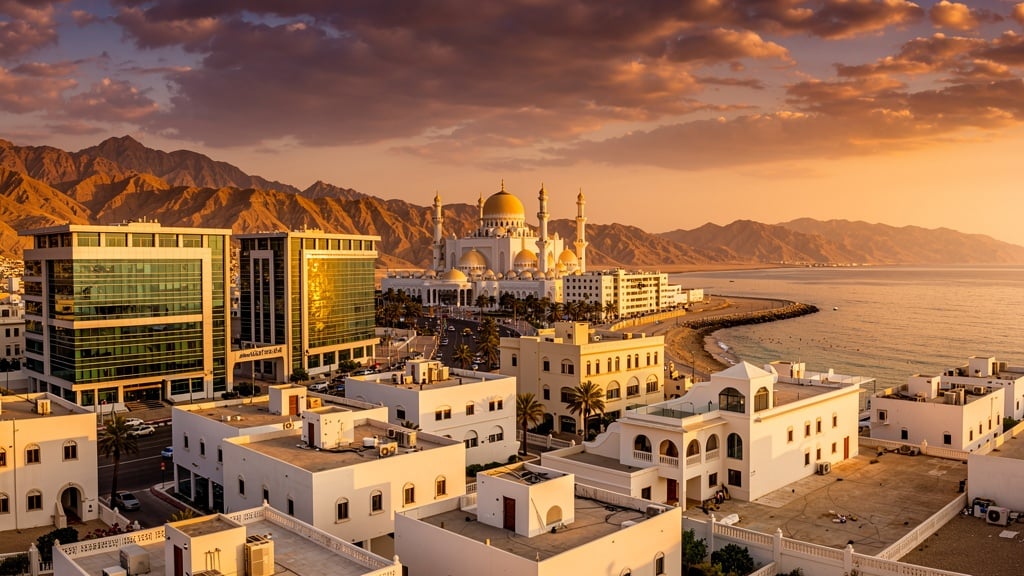
Modern Muscat is actually a sprawling metropolitan area made up of several
distinct districts, each with its own character and appeal. The original Old Muscat
district, clustered around the twin Portuguese forts and the Sultani Palace complex,
retains much of its historic charm with narrow lanes, painted gateways and the
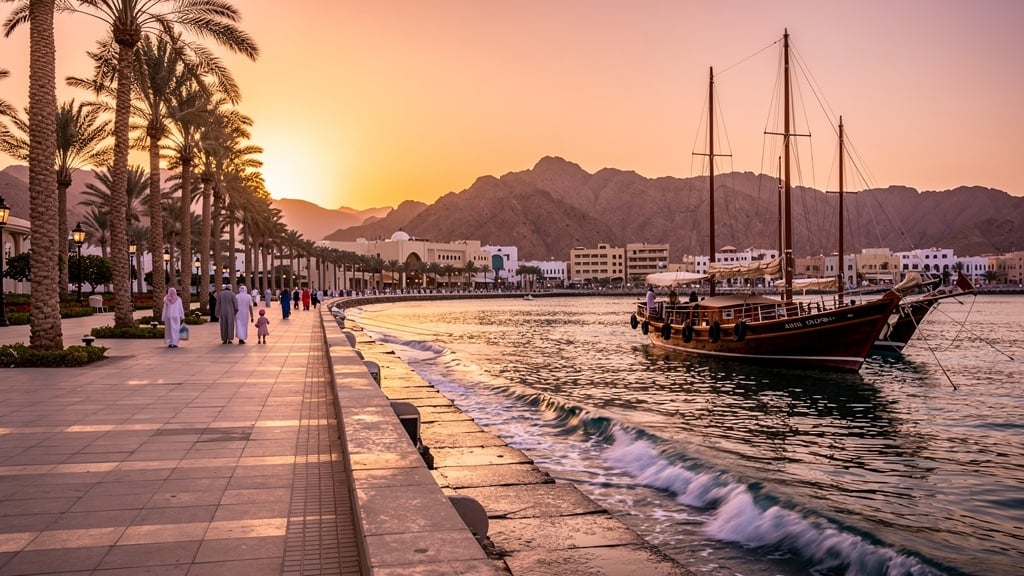
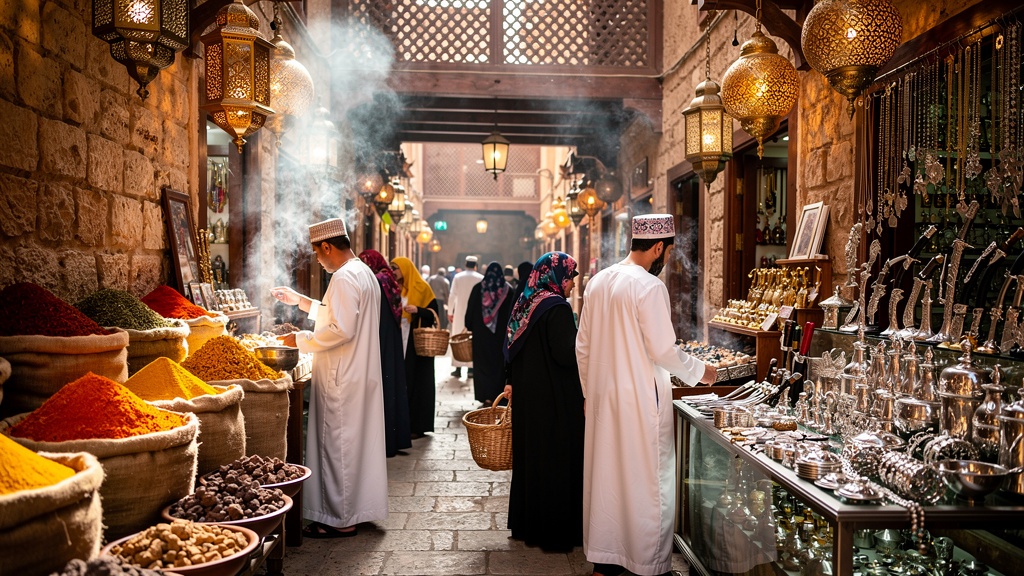
faint scent of frankincense drifting from nearby homes. Adjacent to it is Mutrah,
the old trading quarter, whose famous Corniche waterfront and ancient covered souq
draw both local residents and international visitors in equal measure.
Moving inland along the coast you encounter the modern commercial heart of
Ruwi, Muscat's original business district with its towering office blocks,
currency exchange offices and colourful Indian quarter. Further west lies the
diplomatic quarter of Shati Al Qurum, home to embassies, upmarket restaurants
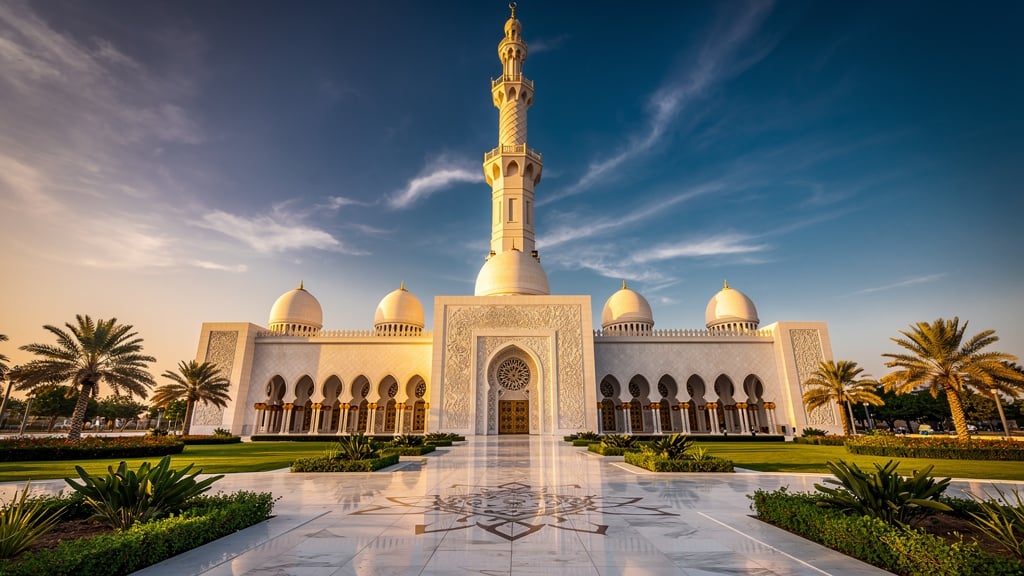
and the elegant Qurum Natural Park. Beyond that, Bausher and Al Ghubrah house
the vast Sultan Qaboos Grand Mosque complex, the Royal Opera House and many of
Muscat's finest hotels. At the western edge of the metropolitan area, the
districts of Al Seeb and Muscat International Airport serve as the gateway
through which most international visitors first arrive.
Omani Culture: A Society Built on Hospitality
Understanding Muscat requires at least a passing familiarity with the cultural
values that animate Omani society. Chief among these is the principle of
karam — generosity and hospitality — which Omanis regard not merely as
a social nicety but as a moral and religious obligation. A stranger who asks for
directions in Muscat is quite likely to be escorted personally to their destination.
An invitation to share coffee, dates and halwa (a sweet confection of rose water,
saffron and clarified butter) is a genuine expression of warmth that should be
accepted, however briefly, with gratitude and respect.
Omanis are largely followers of the Ibadi school of Islam, an early Islamic
tradition distinct from both Sunni and Shia Islam and characterised historically
by its emphasis on moderation, consultation and religious tolerance. This moderate
Islamic tradition has shaped a society that is broadly welcoming to people of all
faiths and nationalities, and that prides itself on peaceful coexistence. Visitors
to Muscat will not encounter the social restrictions common in some neighbouring
Gulf states; women may drive, alcohol is available in licensed hotels and restaurants,
and dress codes — while generally modest — are not excessively restrictive for tourists
exploring the city's public spaces.
The Natural Setting: Mountains, Wadis and the Arabian Sea
Muscat's physical geography is extraordinarily dramatic. The city is hemmed in to
the north and west by the Al Hajar range — a rugged spine of limestone mountains
that in places rises to over 3,000 metres above sea level and that offers some of
the most spectacular off-road driving and trekking in the Arabian Peninsula. The
contrast between the grey-brown mountain ramparts and the turquoise sea below them
is startling, particularly at dawn and dusk when the light turns the rock faces
gold and amber.
Between the mountains and the sea, a network of ancient wadis — seasonal riverbeds
that run with water after winter rains — cuts through the landscape, creating
pockets of lush green vegetation that feel miraculous in the context of the
surrounding aridity. Some wadis, like Wadi Shab and Wadi Bani Khalid, have
become popular day-trip destinations from Muscat, offering freshwater pools,
natural rock slides and spectacular canyon scenery within two to three hours'
drive of the city centre.
The Arabian Sea coastline around Muscat ranges from sweeping white sand beaches
ideal for swimming and water sports to dramatic rocky headlands where the sea
crashes against ancient volcanic cliffs. Turtles nest on beaches near Ras Al
Hamra and Qurayat, providing one of Oman's most magical natural spectacles
between October and February each year.