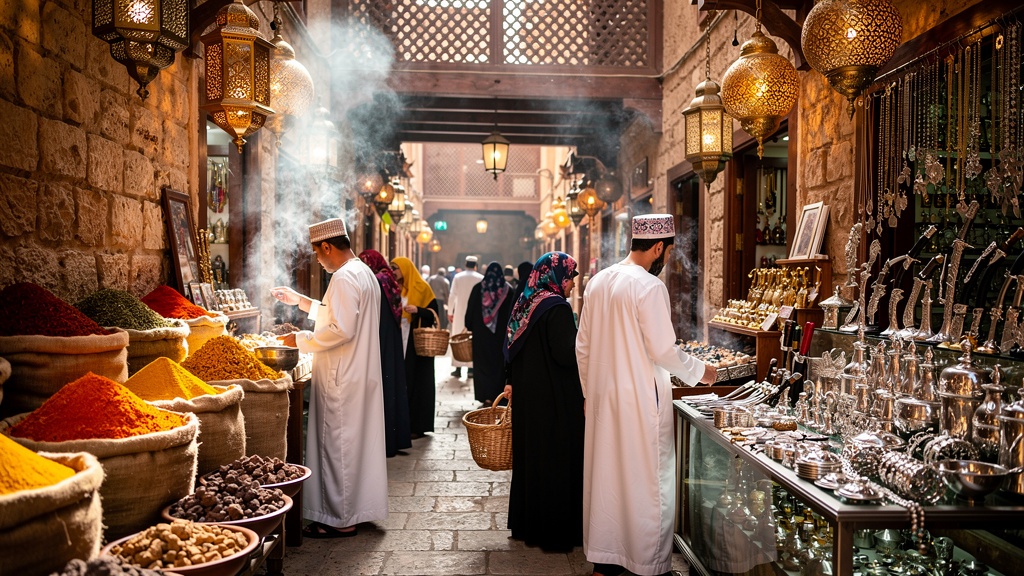
Muscat Travel Guide 2026
Your comprehensive, up-to-date guide to planning a perfect visit to Muscat — visas, transport, food, budget, culture and everything in between.
Planning a trip to Muscat has never been easier, and the rewards for those who make the journey are extraordinary. This guide covers everything you need to know — from the moment you start thinking about your trip to the moment you return home with memories that will last a lifetime.
📋 In This Guide
✈️ Getting There
By Air — Muscat International Airport (MCT)
The vast majority of international visitors arrive at Muscat International Airport (IATA code: MCT), one of the region's fastest-growing aviation hubs and currently undergoing a major capacity expansion that will increase its annual handling capacity to 48 million passengers. The airport is located in the Al Seeb district at the western end of the Muscat metropolitan area, approximately 38 kilometres by road from the old city and around 28 kilometres from the main hotel and business district of Ruwi and Qurum.
Oman Air, the national flag carrier, operates an extensive global network that includes direct services to London Heathrow, Frankfurt, Paris Charles de Gaulle, Zurich, Kuala Lumpur, Singapore, Bangkok, Mumbai, Delhi, Colombo, Nairobi, Dar es Salaam and many other destinations. Oman Air is consistently ranked among the top airlines in the Middle East for both service quality and on-time performance. In addition to Oman Air, a large number of international carriers operate scheduled services into Muscat, including British Airways, Lufthansa, Air France, Turkish Airlines, Emirates, Qatar Airways, Etihad, IndiGo, Air India, Singapore Airlines, Malaysian Airlines and many others.
Flight times to Muscat are approximately 7–8 hours from London, 6 hours from Frankfurt or Paris, 5 hours from Moscow, 3.5 hours from Mumbai, 6 hours from Singapore and 2.5 hours from Dubai. The airport offers extensive facilities including duty-free shopping, banking and currency exchange, restaurants and cafés, and a modern business class lounge.
Airport Transfers
Several options are available for travellers arriving at Muscat International Airport and wishing to travel to the city centre. The most convenient and cost-effective option for most visitors is the Mwasalat public bus service (Bus Route 2), which operates between the airport and the Ruwi Bus Station in the city centre at regular intervals throughout the day and night, with a fare of approximately OMR 0.300 (around USD 0.80). The journey takes approximately 45–60 minutes depending on traffic.
Taxis are widely available outside the airport arrivals hall, and while they are more expensive than the bus, they offer a more comfortable and direct journey to your hotel. Metered taxis should be used where possible; the fare to the central hotel district is typically around OMR 7–12 (approximately USD 18–32). Private car hire services and hotel transfer vehicles can also be arranged in advance, particularly useful for families with significant luggage or groups arriving late at night.
🛂 Visa Requirements
Oman has made considerable strides in recent years toward simplifying its visa regime and welcoming international visitors, and the current system is one of the most accessible in the Gulf region.
Visa on Arrival & E-Visa
Citizens of more than 100 countries are eligible for either visa-free entry or a visa on arrival for Oman, typically for stays of up to 30 days. These include citizens of all European Union member states, the United Kingdom, the United States, Canada, Australia, New Zealand, Japan, South Korea, Singapore, most Latin American countries, and many others. The visa on arrival fee is currently OMR 20 (approximately USD 52) for a 30-day single entry visa, and payment can be made in cash or by credit card at the immigration counters in the arrivals hall.
An e-visa system allows eligible travellers to apply for and receive their Oman visa online before departure, avoiding any possibility of delays at immigration on arrival. The e-visa application is processed through the Royal Oman Police's official e-services portal and can normally be approved within 24–48 hours. The e-visa costs the same as the visa on arrival and is strongly recommended for travellers who wish to streamline their arrival experience, particularly during peak season when immigration queues can be lengthy.
Visa Requirements for All Nationalities
Travellers should ensure their passport has a validity of at least six months beyond their intended date of departure from Oman, as this is an absolute requirement for entry. Evidence of onward travel (a return or connecting flight booking) and proof of sufficient funds for the duration of the stay may also be requested by immigration officers, though in practice these requirements are rarely enforced strictly for travellers arriving at Muscat International Airport.
🌤️ Best Time to Visit Muscat
Muscat sits at a latitude of approximately 23.5° North, placing it firmly within the subtropical arid zone and giving it a climate characterised by extremely hot, humid summers and pleasantly warm winters. Understanding the city's seasonal rhythms is essential for planning a comfortable and enjoyable visit.
October to March — Peak Season (Recommended)
The period from mid-October through to the end of March represents the optimal time to visit Muscat for most travellers. Daytime temperatures during these months typically range from a very comfortable 20°C to 28°C, with cool evenings that make al fresco dining and evening Corniche walks particularly enjoyable. January and February are the coolest months, with overnight temperatures occasionally dipping to 15°C — light jacket weather in the evenings. This is also the period when occasional winter rains fall on the Hajar Mountains, creating spectacular wadi scenery and waterfalls that transform the landscape dramatically.
The winter season also coincides with Muscat's cultural calendar highlights: the Royal Opera House's main performance season, the annual Muscat Festival (a month-long celebration of Omani culture, arts and entertainment), and the peak season for turtle hatchling observation at Ras Al Jinz. Accommodation prices are at their highest during this period and advance booking of popular hotels is strongly recommended.
April and May — Shoulder Season
April marks the transition from the pleasant winter season to the searing heat of the Omani summer. Daytime temperatures in April typically reach 30–35°C, which while warm is still manageable for touring, particularly if outdoor sightseeing is limited to early mornings and evenings. By May, temperatures are climbing toward 38–42°C and humidity is beginning to rise, making outdoor activities increasingly uncomfortable. Accommodation prices begin to fall during this period, making it a reasonable choice for budget-conscious travellers who are prepared for the heat and who focus their activities on indoor attractions such as museums and shopping.
June to September — Summer Season
The Omani summer is intense by any standard. July and August see average daytime temperatures of 38–42°C, with humidity levels that can make the heat feel even more oppressive than the raw thermometer reading suggests. The Khareef (monsoon season) brings heavy rains and cooler temperatures to the Dhofar region in the south of Oman, making the city of Salalah a popular domestic holiday destination during this period — but Muscat itself receives little benefit from the monsoon and remains relentlessly hot. Budget-conscious travellers willing to limit outdoor activities to the early mornings and evenings and to spend the hottest part of the day in air-conditioned museums, malls and restaurants can still have a rewarding Muscat experience in summer, and accommodation prices are at their annual lowest.
Oct–Dec
22–30°C warm & perfect
Great TimeJan–Mar
18–27°C ideal weather
Best TimeApr–May
28–38°C, warming up
ShoulderJun–Sep
38–44°C, very hot
Off Peak🚌 Getting Around Muscat
Muscat is a sprawling city that covers a considerable distance from east to west, and while a car is unquestionably the most convenient way to explore all areas, the city's public transport network has improved dramatically in recent years and is now a viable option for visitors on a tighter budget.
Taxi Services
Taxis are the most commonly used form of transport by international visitors in Muscat. The city has two types of taxi service: metered orange taxis that operate from designated ranks and respond to street hailing, and app-based services including OTaxi (operated by Oman's national telecommunications company) and Careem, which offers more transparent, pre-agreed pricing through its smartphone application. App-based services are generally recommended for visitors as they eliminate any uncertainty about fares and allow real-time trip tracking. Fares within the central Muscat area typically range from OMR 2–8 for most journeys.
Mwasalat Public Bus Network
Oman's national bus company Mwasalat operates an expanding network of city bus routes across Muscat that now reaches most major tourist sites and residential areas. Fares are extremely affordable (typically OMR 0.200–0.500 per journey), buses are modern and air-conditioned, and the network operates from early morning until midnight on most routes. The Ruwi Bus Terminal serves as the main interchange point for the city bus network. While the bus network is not as convenient as a taxi for getting between specific attractions quickly, it is an excellent option for budget-conscious travellers and provides an authentic insight into everyday Omani urban life.
Car Rental
Renting a car is unquestionably the most flexible and convenient way to explore Muscat and its surroundings. All major international car rental companies (Hertz, Avis, Budget, Enterprise, Europcar) operate from Muscat International Airport and from several city centre locations. Compact and economy cars start from approximately OMR 12–18 per day with full insurance. Roads in Oman are excellent — well-maintained, well-signposted and largely uncrowded outside the peak commuting hours of 7–9 AM and 4–7 PM. An international driving permit is technically required in addition to your home country licence, though in practice many car rental companies accept the home country licence alone for visitors from countries with bilateral agreements with Oman. A 4WD vehicle is essential if you plan to venture off-road into the mountains or desert.
Walking
Walking is an entirely practical and deeply enjoyable way to explore specific districts of Muscat, particularly the old city area, the Mutrah Corniche and the Qurum waterfront. However, the enormous distances between Muscat's various neighbourhoods — and the complete absence of shade on most roads between destinations — mean that walking between districts is inadvisable except during the cooler months of December to February. Always carry water when walking outdoors and wear sun protection.
🏨 Where to Stay in Muscat
Muscat offers an excellent and diverse range of accommodation options, from internationally branded luxury beach resorts to well-priced mid-range hotels and comfortable budget guesthouses. Choosing the right area to stay in can significantly affect the quality and convenience of your visit.
Luxury: Shati Al Qurum & Qurum (OMR 80–250+ per night)
The beachfront area of Shati Al Qurum and the adjacent Qurum district host the majority of Muscat's most prestigious international hotels, including the Grand Hyatt Muscat, the Shangri-La Al Bandar, the InterContinental Muscat and the W Muscat. These properties typically offer private beach access, multiple world-class restaurants, extensive spa facilities, swimming pools and the full range of five-star amenities. The location is ideal for easy access to the Royal Opera House, the Qurum Natural Park and the city's finest restaurants. The beachfront promenade is particularly beautiful in this district, and the views across the Gulf of Oman from the hotel terraces at sunset are remarkable.
Mid-Range: Ruwi & Bausher (OMR 25–70 per night)
The commercial districts of Ruwi and Bausher offer a wide range of comfortable mid-range hotels that represent excellent value for money and are particularly well-suited to business travellers and visitors who prefer a central location with easy access to both the old city and the newer western districts. Properties in this price category typically include air-conditioned rooms, on-site restaurants, swimming pools and reliable Wi-Fi. The Crown Plaza Muscat (Ruwi) and the Hotel Muscat Holiday are well-regarded examples of the mid-range category.
Budget: Mutrah & Ruwi (OMR 10–25 per night)
Budget accommodation in Muscat is concentrated in the Mutrah and Ruwi districts, where a range of guesthouses, small hotels and apartment rentals cater to backpackers and budget-conscious travellers. Accommodation in this category is generally clean and functional if not luxurious, and the location in and around Mutrah places budget visitors within easy walking distance of the souq, the Corniche and the old city. The budget accommodation scene in Muscat has improved considerably in recent years, and Muscat is now a significantly more practical destination for backpacker-style travel than it was a decade ago.
🍽️ Food & Dining in Muscat
Omani cuisine is one of the Arab world's great undiscovered culinary traditions — a fragrant, complex fusion of Arabic, Indian, Persian and East African influences that produces dishes of remarkable depth and flavour. Eating well in Muscat is both easy and affordable, with options ranging from cheap and cheerful street food to sophisticated fine dining.
Traditional Omani Dishes to Try
Shuwa — the undisputed king of Omani cuisine. Whole lamb or goat is marinated in a complex paste of spices (including cumin, coriander, cardamom and chilli), wrapped in banana or palm leaves, and slow-cooked in an underground earth oven for 24–48 hours. The result is extraordinarily tender, fragrant meat that falls from the bone and is served with rice and date chutney. Shuwa is traditionally prepared for celebrations and festivals, but it can be found year-round at specialist Omani restaurants and at the numerous wedding-style catering establishments that operate throughout the city.
Mushaltat and Rakhal — traditional Omani breads made from a simple dough of flour, water and salt, cooked on a circular griddle and served with honey, date syrup, ghee or the mildly spiced lentil soup known as harees. These breads are the staple accompaniment to most Omani home cooking and are widely available from street stalls and traditional restaurants throughout Muscat.
Majboos — a slow-cooked rice dish with meat (usually chicken or lamb), similar in concept to the South Asian biryani but with its own distinctly Omani flavour profile built around dried limes (loomi), rose water, saffron and a warming spice mix. Majboos is one of the most widely available dishes in Muscat's traditional restaurants and is an excellent introduction to Omani home cooking.
Omani Halwa — the national sweet, prepared from clarified butter, sugar, rose water, saffron and a variety of nuts, and cooked to a thick, translucent jelly-like consistency. Halwa is served with strong Omani coffee (qahwa) at virtually every social occasion and can be purchased from specialist halwa shops throughout the city.
Dining Areas & Restaurant Types
Muscat's dining scene is diverse and genuinely excellent. The Shati Al Qurum and Qurum districts host the majority of the city's upmarket and fine-dining restaurants, with several rooftop venues offering spectacular sea views alongside their menus. The Mutrah and Ruwi districts are the places to seek out authentic Omani cuisine and excellent South Asian food at very affordable prices. Muttrah is particularly well-known for its Zanzibari restaurants, which reflect the historical connections between Oman and East Africa with menus featuring richly spiced coconut curries, slow-cooked meats and fragrant rice dishes.
Alcohol in Muscat
Alcohol is available in Muscat but is restricted to licensed premises: upmarket hotels, dedicated bottle shops (for take-away purchase by non-Muslim residents and tourists) and a small number of licensed restaurants. Public intoxication is illegal and culturally unacceptable. Visitors who wish to consume alcohol should do so within the licensed premises where it is served, and should always be aware that they are guests in a predominantly Muslim country with strong cultural norms around sobriety.
💰 Currency, Budget & Money
The Omani Rial (OMR)
The currency of Oman is the Omani Rial (OMR), which is divided into 1,000 baisa. The Rial has been pegged to the US Dollar since 1986 at the fixed rate of approximately USD 2.60 = OMR 1, making budget calculations straightforward for US and many other travellers. The Rial is one of the world's highest-valued currency units, which can initially cause confusion for visitors expecting smaller numbers on price tags — a very good lunch might cost OMR 3, while a luxury hotel room might cost OMR 120.
Budget Considerations
Muscat can be experienced across a very wide budget range depending on accommodation choices and travel style. Budget travellers staying in guesthouses, using public transport and eating at local restaurants can get by on approximately OMR 20–30 (USD 52–78) per day. Mid-range travellers staying in comfortable three-star hotels, using taxis and eating at a mix of local and international restaurants should budget approximately OMR 50–80 (USD 130–208) per day. Luxury travellers staying in five-star beach resorts and dining at hotel restaurants can easily spend OMR 200–400+ (USD 520–1,040+) per day, particularly when spa treatments, private tours and fine dining are included.
Currency Exchange & ATMs
ATMs accepting international cards (Visa, Mastercard, Amex) are extremely common throughout Muscat, particularly in shopping malls, hotel lobbies and major commercial streets. Currency exchange offices are concentrated in the Ruwi and Mutrah districts and offer competitive rates for major currencies including US Dollars, Euros, British Pounds, Indian Rupees and UAE Dirhams. Airport currency exchange desks are convenient but typically offer slightly less favourable rates than city centre offices. Credit cards are accepted at virtually all hotels, upmarket restaurants and modern shops, though cash is preferred (and sometimes required) in traditional souqs and small local restaurants.
🤝 Culture & Etiquette
Oman has a well-deserved reputation as one of the most welcoming and culturally sensitive countries in the Arab world, and visitors who make the modest effort to understand and respect Omani cultural norms will find that their experience is enriched enormously as a result.
Dress Code
While Oman is considerably more relaxed about dress than some of its Gulf neighbours, visitors should dress modestly and respectfully when visiting religious sites, traditional markets and government buildings. For women, this means covering the shoulders, arms and legs; a loose scarf or shawl carried in a bag can be quickly deployed when entering a mosque or traditional area. For men, shorts are generally acceptable in tourist areas but long trousers are more appropriate in traditional settings. At the Sultan Qaboos Grand Mosque, appropriate clothing is required without exception for all visitors; abayas and head scarves for women are available to borrow free of charge at the mosque entrance. On Muscat's beaches and at hotel pools, swimwear is entirely appropriate.
Greetings and Social Interaction
The standard Omani greeting is the Arabic As-salamu alaykum ("Peace be upon you"), to which the response is Wa alaykum as-salam ("And upon you peace"). Even a basic familiarity with these phrases will generate enormous goodwill from Omani hosts and is always deeply appreciated. When greeting Omani men, a handshake is appropriate; however, visitors should wait for an Omani woman to extend her hand first before offering one, as many Omani women prefer not to shake hands with men outside their family. Physical contact between men and women in public is not socially acceptable in Oman, though couples walking together or holding hands discreetly is generally tolerated in tourist areas.
Photography
Photography of Muscat's landscapes, architecture and markets is generally welcomed and encouraged. However, visitors should always ask permission before photographing local people — particularly women — and should be prepared to accept a refusal graciously. Photographing military installations, police stations and the royal palace complex is prohibited. Inside mosques (where photography is permitted in designated areas), photography should be conducted quietly and respectfully, without disrupting worshippers.
Ramadan
Visiting Muscat during the holy month of Ramadan (dates vary each year according to the Islamic lunar calendar) is a genuinely fascinating experience that offers a window into the spiritual life of Omani society, but it does require some adjustments. During Ramadan, Muslims fast from dawn to dusk, and eating, drinking or smoking in public during daylight hours is illegal for everyone, including non-Muslim visitors. Most restaurants and cafés open for business during the day but operate behind screens or curtains; many non-hotel restaurants open only from sunset. The evenings during Ramadan, by contrast, are extraordinarily vibrant as the fast is broken (Iftar) and families and friends gather to eat, socialise and celebrate.
🏥 Health & Safety in Muscat
Oman consistently ranks among the safest countries in the world, and Muscat is regarded by most international travellers as one of the safest capital cities they have visited. Violent crime against tourists is virtually unheard of, and the Omani police are professional, approachable and genuinely helpful to visitors in difficulty.
Health Precautions
No vaccinations are specifically required for entry to Oman, though routine vaccinations (MMR, tetanus, hepatitis A and B) are recommended. Tap water in Muscat is technically safe to drink but many visitors and residents prefer bottled water, which is extremely affordable and available everywhere. The main health risk for visitors is dehydration and heat exhaustion during the hot summer months — drink at least 2–3 litres of water per day, avoid excessive physical activity during the hottest part of the day (12 noon–4 PM), and use high-factor sunscreen at all times outdoors.
Medical facilities in Muscat are of a high standard by regional and international comparisons. The Royal Hospital and Sultan Qaboos University Hospital are both internationally accredited institutions with excellent emergency departments and specialist services. Comprehensive travel insurance that includes medical evacuation coverage is strongly recommended for all visitors.
General Safety Advice
The usual precautions for travel in any busy city apply in Muscat: keep copies of your passport and travel documents separately from the originals, use hotel safes for valuables, be aware of your surroundings in crowded areas like the souq, and use app-based taxis rather than unmarked vehicles offering rides. Petty theft is relatively rare by international standards but does occur in busy tourist areas. When driving, be aware that road traffic accidents are a more significant safety concern than crime: Oman has one of the higher rates of road traffic accidents per capita in the region, and defensive driving is essential, particularly on the inter-city highways where speeding is prevalent.
🧳 What to Pack for Muscat
Clothing
- Lightweight, breathable fabrics (cotton and linen ideal)
- Modest clothing covering shoulders and knees for market and mosque visits
- A light shawl or scarf for women (mosque and cultural site visits)
- Comfortable walking shoes suitable for both streets and beach
- Swimwear for beach and hotel pool use
- One smart-casual outfit for Opera House visits or upmarket restaurants
- A light jacket or layer for evenings in winter (Dec–Feb)
Essentials
- High-factor sunscreen (SPF 50+ strongly recommended)
- Polarised sunglasses — the Omani sun is intense
- Reusable water bottle — stay hydrated at all times
- Power adapter (Oman uses UK-style 3-pin sockets, 240V)
- Portable power bank for long days of exploring
- Insect repellent (useful for wadi and beach visits)
- Basic medical kit with pain relief, rehydration sachets and blister plasters
Documents & Money
- Passport (minimum 6 months remaining validity)
- Printed or digital copy of e-visa or visa on arrival confirmation
- Travel insurance documents and emergency contact numbers
- International driving permit (if renting a car)
- Small amount of Omani Rial cash for small purchases and markets
- Credit/debit cards — widely accepted at hotels and modern venues
📅 Sample 5-Day Muscat Itinerary
Day 1: Arrival & Old Muscat
After arriving at Muscat International Airport and checking into your hotel, spend your first afternoon in the Old Muscat district. Explore the area around Al Alam Palace, walk along the sea wall below the twin Portuguese forts, and visit the informative Natural History Museum at the edge of the old city. In the evening, make your way to the Mutrah Corniche for an evening stroll and a seafood dinner at one of the Corniche's excellent waterfront restaurants.
Day 2: Grand Mosque & Cultural Highlights
Begin your day with an early-morning visit to the Sultan Qaboos Grand Mosque (arriving at 8 AM to beat the crowds). Spend at least two hours exploring this extraordinary building and its beautifully maintained gardens. In the afternoon, visit the National Museum of Oman for a comprehensive introduction to Oman's history, then round off the day with a visit to the Bait Al Zubair Museum. In the evening, attend a performance at the Royal Opera House if the schedule permits, or enjoy dinner at one of the Shati Al Qurum waterfront restaurants.
Day 3: Mutrah Souq & Marine Adventure
Spend the morning exploring Mutrah Souq at leisure — arrive early when the market is quietest and the light most beautiful. In the afternoon, join a diving or snorkelling excursion from Bandar Al Khayran, returning in time for sunset over the harbour. Alternatively, book an evening dhow cruise from the Mutrah Corniche for a different perspective on the city's dramatic mountain-backed skyline.
Day 4: Day Trip to Nizwa
Depart early by car (or on an organised day tour) for the two-hour drive to Nizwa. Visit the magnificent Nizwa Fort, explore the traditional souq, and enjoy lunch at one of Nizwa's excellent traditional Omani restaurants. If time permits, continue to the village of Bahla (another UNESCO-listed fort) or take the mountain road toward Jebel Akhdar for spectacular scenery. Return to Muscat in the late afternoon.
Day 5: Beach, Shopping & Departure
Spend a leisurely final morning at Qurum Beach, then do some last-minute souvenir shopping at the Muscat Grand Mall or the City Centre Mall before collecting any final keepsakes from Mutrah Souq. Transfer to the airport for your departure flight, carrying memories of one of the world's most genuinely rewarding travel destinations.
📞 Practical Information
Communications
Mobile network coverage in Muscat is excellent, with both Oman Mobile (Omantel) and Ooredoo offering comprehensive 4G/LTE networks throughout the metropolitan area. Tourist SIM cards are available from airport kiosks and mobile phone shops throughout the city for approximately OMR 4–8, and provide an easy and affordable solution for data connectivity during your stay. Free Wi-Fi is available in most hotels, cafés and shopping malls.
Emergency Numbers
The emergency telephone number in Oman is 9999 for police, ambulance and fire services. The Royal Oman Police Tourist Police unit can be reached at 24560099 and specialises in assisting visitors in difficulty.
Opening Hours & Working Week
Oman's working week runs from Sunday to Thursday, with Friday and Saturday as the weekend. Government offices typically operate from 7:30 AM to 2:30 PM Sunday to Thursday. Private businesses and shops generally operate from 9 AM to 1 PM and then 4 PM to 10 PM or later, though shopping malls typically stay open continuously from 10 AM to 10 PM or midnight. During Ramadan, working hours are reduced and many businesses adjust their opening hours.
Top 9 Tips for First-Time Visitors to Muscat
Book Winter Trips Well in Advance
Hotels and flights to Muscat during the October–March peak season sell out quickly, particularly around the Muscat Festival and public holidays. Book at least 2–3 months ahead for the best rates and availability.
Rent a Car for Maximum Flexibility
While taxis and buses cover the city adequately, a rental car opens up a world of day trips to wadis, forts and mountains that are simply impractical on public transport. Roads are excellent and driving is relatively stress-free.
Respect Local Customs at All Times
Omanis are extraordinarily tolerant and welcoming hosts, but they do appreciate visitors who make the effort to dress modestly and behave respectfully. Small gestures of cultural awareness generate enormous goodwill.
Visit the Grand Mosque First Thing
The Sultan Qaboos Grand Mosque is most rewarding when visited at opening time. You will have the vast interior largely to yourself, the light is beautiful in the early morning, and photography conditions are optimal before tour groups arrive.
Explore Mutrah Souq in the Evening
The old souq is most atmospheric after 5 PM when the heat of the day has passed, the shops are busy, the lanterns are lit and the smell of frankincense fills the air. Allow at least 2 hours and budget for impulse purchases.
Learn a Few Arabic Phrases
Even a simple Marhaba (hello) or Shukran (thank you) will generate warm smiles and enthusiastic responses from Omani hosts. Arabic speakers invariably find their experience in Muscat enriched by every Arabic interaction.
Try the Local Coffee and Halwa
Qahwa (Omani spiced coffee flavoured with cardamom and rose water) served with sweet halwa is the definitive Omani hospitality gesture. Accept it whenever offered — it is both delicious and culturally meaningful.
Plan at Least One Coastal Excursion
Whether it is a snorkelling trip to Bandar Al Khayran, a sunset dhow cruise from the Corniche, or simply an evening at Qurum Beach, the sea is an essential part of the Muscat experience that should not be missed.
Drink Water Constantly
Dehydration is the most common health issue for visitors to Muscat, particularly in summer. Carry a water bottle at all times, drink before you feel thirsty, and choose air-conditioned transport during the hottest hours of the day.